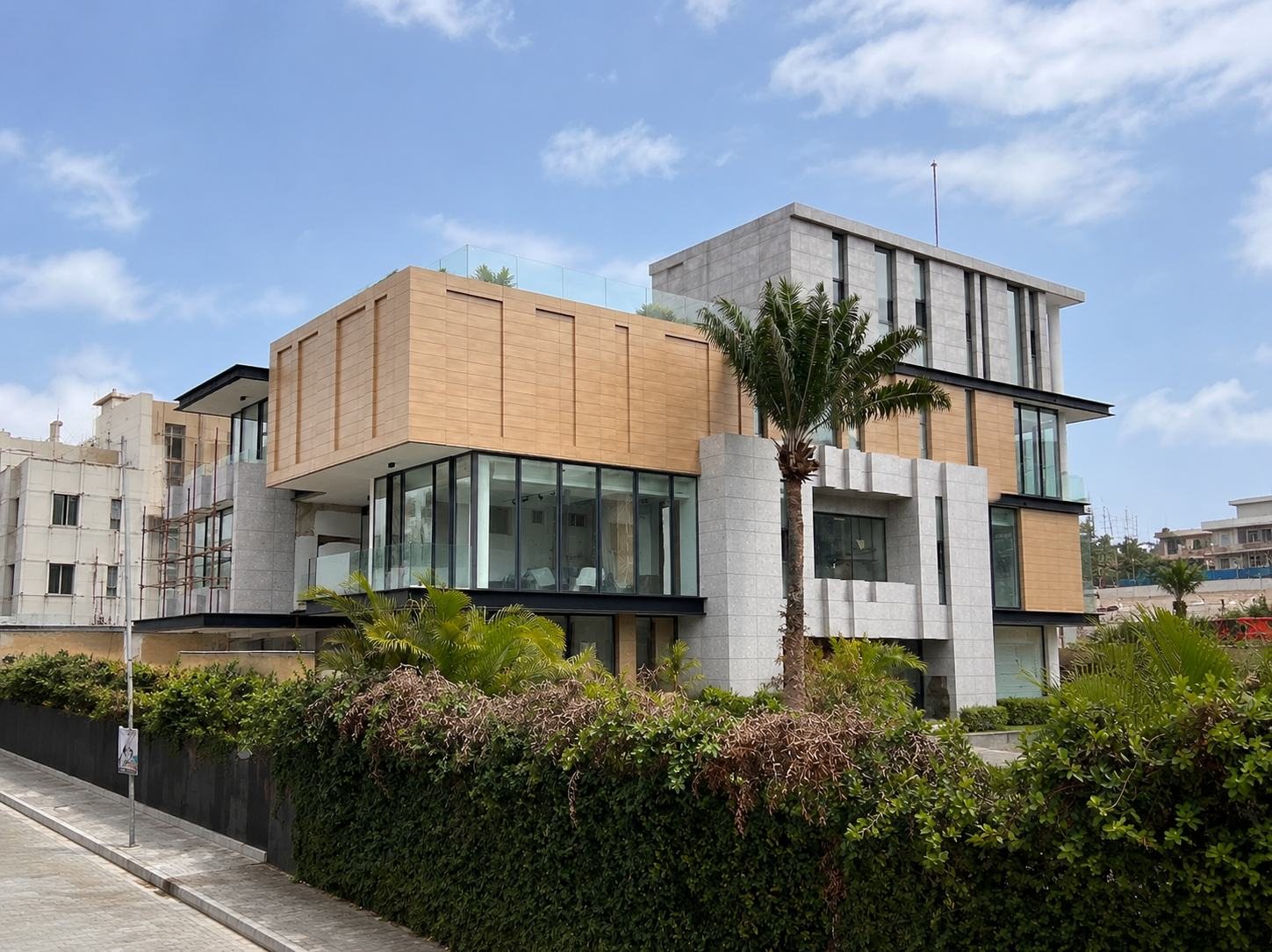
Specifying porcelain for coastal Lagos.
What changes when the site is on Victoria Island, Ikoyi, Lekki or Banana Island, and how to write it into the specification.
Coastal Lagos combines high humidity for most of the year, salt-laden air off the Atlantic, heavy rainy-season downpours and strong sun. Porcelain stoneware performs well in this climate, but only when the specification covers four things: the tile body, the surface, the installation system and the movement joints. This guide sets out what to ask for, clause by clause.
Updated September 2026
Water is the constant.
Relative humidity stays high through most of the year and the rainy season, roughly April to October, brings intense downpours and standing water on terraces, entrances and pool decks. Cement-based products cure slowly and organic materials swell; a vitrified porcelain body does neither.
Specify porcelain stoneware with water absorption of 0.5% or less (ISO 10545-3, group BIa under EN 14411). Below that threshold the body does not take on water, so it does not stain from the back, does not lift on damp substrates and does not host mould in the joint line.
Salt attacks the metal, not the tile.
Chlorides carried in from the Atlantic corrode steel fixings, stain concrete and degrade painted and organic finishes. Vitrified porcelain is chemically inert to salt and to the cleaning agents used to remove it; ask for chemical resistance to ISO 10545-13 and colour-fast, through-body pigments for exposed areas.
The metal is where the specification matters: façade substructures, anchors, trims and drains should be aluminium or stainless steel (A4 / 316 grade) within the first kilometres of the shoreline. Strong sun adds thermal movement, which is handled by the joint layout rather than by the tile.
Four lines that belong in every tile clause.
Body
Porcelain stoneware, EN 14411 group BIa, water absorption 0.5% or less, rectified edges, through-body or full-body colour on external and wet areas.
CollectionsSurface
Slip class stated with its test method: R value to DIN 51130, barefoot class to DIN 51097, or wet DCOF to ANSI A326.3. Natural or structured finishes outside, matte or soft finishes in wet rooms.
Surfaces and finishesFormat and thickness
20 mm porcelain for terraces, pool surrounds and pedestal installations; 9 to 10 mm rectified formats for bonded floors; 6 mm slabs for walls, façades and furniture.
Technical systemsDatasheet and samples
Name the collection and finish, attach the technical datasheet and hold a physical sample at the design studio so that the site can check deliveries against it.
Design Studio LagosSlip resistance, area by area.
Rain, humidity and pool water make wet slip resistance the most common failure on Lagos projects. Typical values, always to be confirmed against the project’s own risk assessment:
Adhesive and grout are part of the specification.
Use a cementitious adhesive of class C2 with deformability S1 to EN 12004, and S2 for large formats, façades and substrates subject to thermal movement. Outdoors and on any format from 60 × 60 cm, specify double spreading (back-buttering) so that the bed is fully filled and no water can collect under the tile.
Grout is the weak line in a humid climate: specify CG2 WA cement grouts with reduced water absorption for external areas, and epoxy RG grouts for pools, showers and commercial kitchens. Waterproof wet rooms, terraces and balconies with a bonded membrane under the tile bed, with falls of at least 1.5% to the drains.
Joints are where coastal projects fail.
Heat, rain and drying cycles move the substrate more than the tile. Keep a minimum joint of 2 mm on rectified formats indoors and 5 mm outdoors, and never lay porcelain butt-jointed.
Place movement joints at every perimeter, column and change of plane, over every structural joint, and in the field at 3 to 4.5 m centres outdoors and 8 to 10 m indoors. Seal them with a flexible sealant or a prefabricated profile, not with grout.
Why ventilated porcelain façades suit the coast.
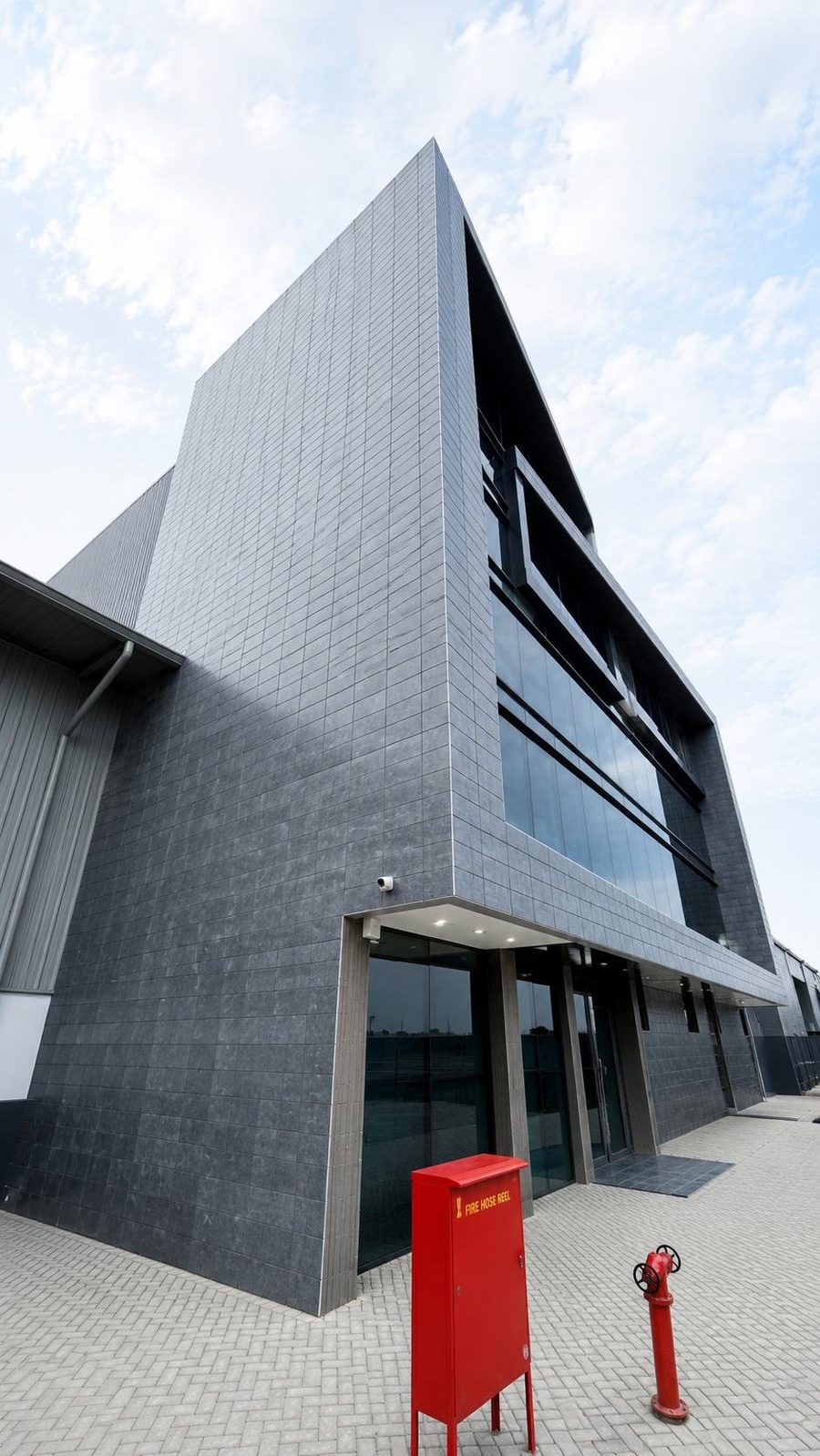
A ventilated façade keeps rain off the wall and lets the cavity behind the porcelain dry out, which is exactly what a humid, salt-laden climate needs. The porcelain skin does not fade, corrode or need repainting, rain washes it, and the shaded cavity cuts solar gain on the structure behind it, reducing cooling loads.
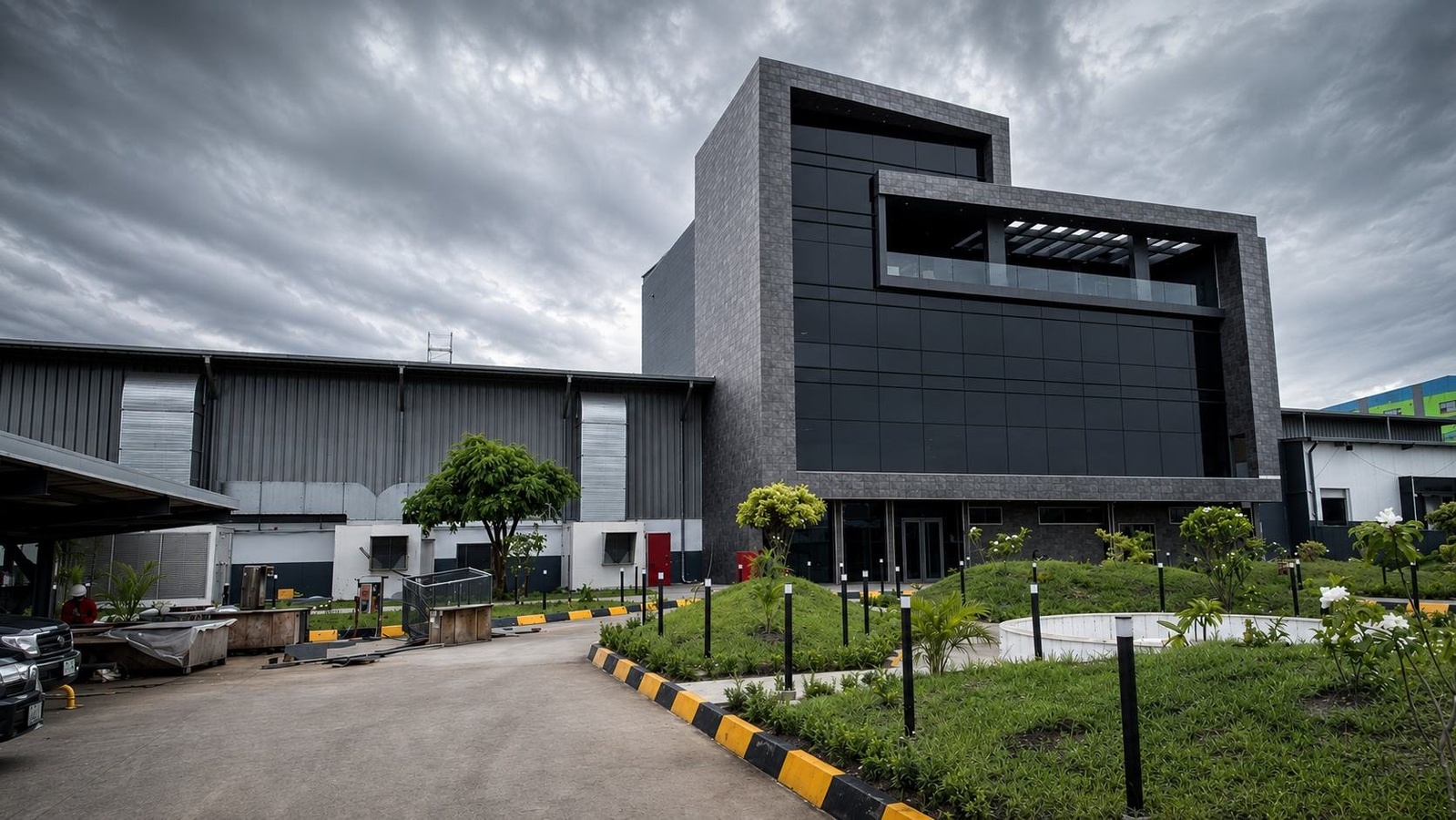
On the Lagos coast the system is specified with an aluminium substructure and stainless-steel anchors, wind-load engineering for Atlantic exposure and porcelain slabs sized to each project. Insignia HQ and the private villa in Ikoyi were both delivered this way.
Large formats on a coastal site.
Large-format tiles and slabs are the finish most Lagos clients ask for, and the one most exposed to damage between the port and the wall. Specify substrate flatness of 3 mm under a 2 m straightedge, S2 adhesive with double spreading, and installers trained on slab handling and suction-frame systems.
Storage and sequencing.
Plan storage on site: dry, vertical, on A-frames, away from rain and salt air, with deliveries scheduled around the rainy season. On the Ikoyi villa, CERAFINI selected the materials with the client in Italy and brought in installation specialists to work with the local team.
Stock, samples and datasheets, in Lagos.
Design Studio Lagos
Victoria Island. Samples, technical datasheets and specification support for architects and contractors.
Visit the studio pagePorcelain in stock
Selected Atlas Concorde collections held in Lagos; the rest ordered from Italy with a confirmed lead time.
CollectionsInstallation materials
Adhesives, grouts, membranes and profiles specified with the tile, so that the whole system sits in one set of datasheets.
Installation materialsBook an appointment
A specification meeting at the studio or on site, with the collection samples and datasheets prepared in advance.
BookFrequently asked.
Does porcelain fade in the Lagos sun?
No. Porcelain colour is fired into the body at over 1,200 °C and is unaffected by UV, heat or salt air. Painted, resin and timber finishes do fade and degrade in the same exposure.
Can I use the same tile inside and outside?
Often yes, in two finishes: the same collection is usually produced in a smooth finish for interiors and a structured or grip finish for exteriors, with 20 mm versions for terraces and pool surrounds. The colour and format stay continuous; only the surface changes.
Which slip rating should I specify for a pool deck?
R11 to DIN 51130 with barefoot class B or C to DIN 51097, or a wet DCOF of 0.42 or higher to ANSI A326.3, in a structured 20 mm porcelain. Confirm against the project’s own risk assessment and local requirements.
Do you supply the adhesives, grouts and membranes as well?
Yes. CERAFINI specifies and supplies the installation system with the tile, so adhesive class, grout type, membrane and profiles are matched to the format and the exposure.
Can I get datasheets and samples before the specification is issued?
Yes. Technical datasheets, test certificates and physical samples are available from the Design Studio in Victoria Island, and a specification meeting can be booked online.